Why bone health belongs in the perimenopause conversation.
A hot flash can interrupt your meeting. A sleepless night can ruin your morning. Changes in your bones? Those generally don’t announce themselves.
That makes bone health easy to leave off the list when you’re talking about perimenopause. You have questions about your sleep, your periods, your energy, and why your body suddenly feels different. Osteoporosis may sound like something to think about much later.
But some of the fastest bone loss happens around your final period—including before your periods stop.
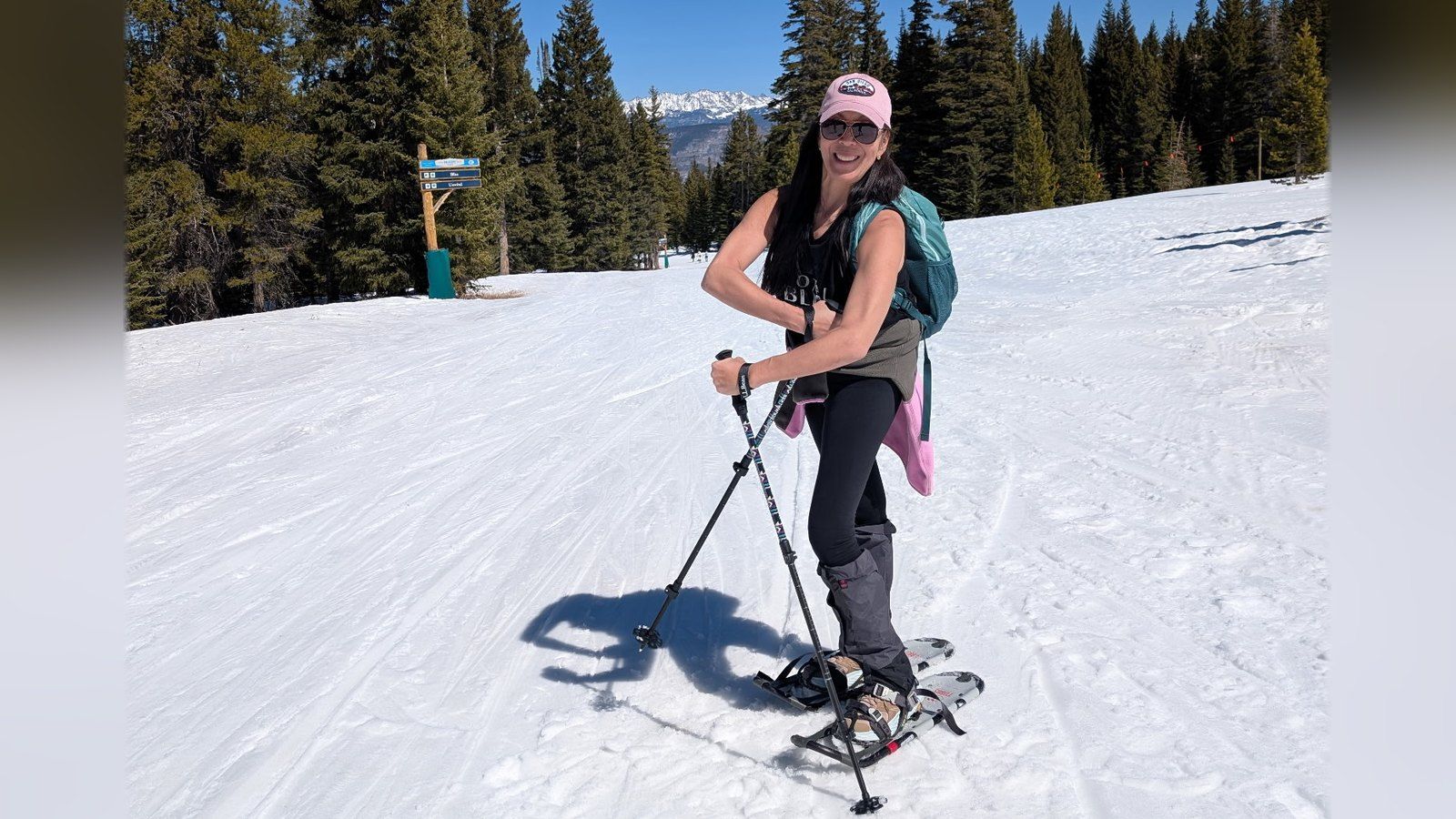
Whether it’s playing pickleball, snowshoeing on vacation, or carrying your own suitcase up the stairs, your bones are part of that picture. They deserve some attention now, too.
Bone loss around menopause doesn’t necessarily happen at a slow, steady pace.
In the Study of Women’s Health Across the Nation, known as SWAN, researchers found that bone-density loss accelerated approximately one year before the final menstrual period and slowed about two years afterward. Across that roughly three-year stretch, women lost an average of about 7% of their bone density at the lower spine.1
Put another way, roughly 70% of the decade’s bone-density loss at the lower spine happened in those three years.1 That’s a meaningful change over a relatively short time. It’s also a study average, not a prediction of what will happen to you.
The useful takeaway is that the conversation can begin while you’re still having periods.
You won’t know which period was your last until twelve months have passed without another one. But you don’t need that exact date to start discussing your bone health. Changes in your cycles can be a reason to bring it up, even though they can’t tell us what your bone density is.
That’s the age many women associate with a first bone-density scan. It’s part of the guidance, but it isn’t the whole story.
The U.S. Preventive Services Task Force recommends routine screening for women 65 and older. It also recommends screening younger postmenopausal women whose risk is elevated, based on clinical assessment. Factors such as low body weight, a parent’s hip fracture, smoking, and excess alcohol use help inform that assessment.2
Other circumstances, including certain medical conditions or long-term steroid use, call for separate consideration.
Risk calculators also have limitations, including how well they estimate fracture risk in Asian, Black, and Hispanic populations. Their results need to be considered alongside your individual health history.2
Being in perimenopause doesn’t automatically mean you need a scan. It does make this a useful time to ask where you stand.
Men don’t go through the same rapid menopause-related shift, but they can develop osteoporosis. And when a hip fracture happens, men tend to fare worse than women, including a higher risk of death afterward.3
There’s another reason to pay attention: an underlying condition or medication may be contributing to the bone loss. Reviews report secondary causes in up to 60% of men with osteoporosis. These can include low testosterone, excess alcohol use, long-term steroids, and other medical conditions.4 That makes looking for contributing causes an important part of the evaluation, rather than simply attributing the loss to age.5
And a bone-density result above the osteoporosis cutoff doesn’t mean there’s no fracture risk. In a large study of older men, most who developed a spine fracture had not met the bone-density definition of osteoporosis.6 The scan matters, but so do previous fractures, medications, falls, and the rest of the person’s health history.
The International Society for Clinical Densitometry recommends bone-density testing for men 70 and older, and earlier when risk factors are present.7 For men, too, the useful question is: what might put my bones at risk, and what should we do about it?
What in my history matters? Bring up previous fractures, your parents’ fracture history, medications, and, for women, changes in your periods. These details help your physician assess your risk.8
Am I supporting my bones day to day? Strength training and adequate nutrition—including protein, calcium, and vitamin D—belong in the discussion. The right exercise plan and any need for supplements depend on your circumstances.8
Would testing be useful for me now? Ask whether a DXA bone-density scan would help guide your care, or whether there’s a reason to revisit testing later. The answer should reflect your individual risk.2
You don’t have to arrive with every answer. These are starting points for a conversation.
There’s plenty competing for your attention in midlife. Bone health can be easy to postpone because it usually isn’t the thing keeping you awake or making your clothes fit differently.
Whether you’re a woman or a man, the things you want to keep doing—your sport, your travels, your everyday independence—give that conversation a purpose. Bone health deserves a place in your midlife health plan.
About the author: Erica Song, MD, is the founder of Vibrant Life Medicine, a physician-led precision longevity practice in Bergen County, New Jersey. She is double board-certified in Obstetrics and Gynecology and in Anti-Aging and Regenerative Medicine.
Routine labs can look normal while early biological changes are already underway. This guide explains the markers, measurements, and clinical questions that precision longevity medicine uses to evaluate healthspan, performance, and future risk.
Six pages. Three minutes. A different way to think about your health.
Vibrant Life Medicine is now accepting founding member interest in Bergen County, New Jersey. Priority List members are contacted first.
Join Priority List