The word is everywhere right now. It is worth being precise about it.
The word is everywhere — on supplements, laboratory panels, wearable dashboards, IV menus, and an impressive number of cold plunges.
Biohacks may be helpful, and I have nothing against cold plunges. But none of that, by itself, is a medical philosophy.
When a word describes everything, it stops describing anything. So it is worth saying plainly what longevity medicine means in a physician’s office — and, more usefully, what it does not.
When I talk about longevity medicine, I mean something much more grounded: understanding where a person’s health may be heading, identifying what can still be changed, and protecting the strength, clarity, and independence that make a longer life worth having.
It is healthspan: more years with the strength, clarity, metabolic health and independence to do what you actually want to do.
That emphasis on function is not marketing language. It is how the World Health Organization defines healthy ageing — around developing and maintaining the functional ability that enables well-being.
In plain terms, the quality of the years matters, not just the number.
That changes the question from only “Do you have a disease today?” to “What can we understand about your health trajectory now, and what might be worth changing while more options remain?”
This is the part I want to be careful about, because there is a version of this field that makes its case by implying your other doctors are not doing their jobs.
They are. Good primary care already covers a great deal: blood pressure, vaccinations, cancer screening, managing chronic disease, and asking about how you live. Those things work, and longevity medicine does not replace your internist, your cardiologist, or anyone else. It should not try to.
What it can add is time, context, and iteration. A result becomes meaningful only when it is considered alongside your symptoms, history, medications, family risk, life stage, and previous results.
With additional time and carefully selected measurements, we can look for meaningful patterns across systems, ask whether a finding would actually change a decision, and then follow what happens after we act.
At Vibrant Life Medicine, I think about the process in four connected steps:
Measure. Start with history, goals, current health, standard preventive needs, and a chosen set of measures of risk and function. Depending on the person that might include laboratory testing, body composition, cardiorespiratory fitness, sleep, cognition, or hormonal assessment.
Interpret. Place each result in the context of age, symptoms, family history, medications, life stage, and goals. A biomarker, symptom, wearable score, or scan is not a plan. My job is to help distinguish what matters, what may be noise, and what is worth watching without acting on yet.
Optimize. Turn the important findings into a prioritized plan with a reasonable evidence base and a clear purpose. Often the foundation is familiar: nutrition, strength and aerobic training, sleep, stress, connection, risk-factor management, and recommended screening. Medication or hormone therapy may be appropriate for some people — never simply because it is popular.
Refine. Reassess at a sensible interval when doing so can answer a real question. Did the marker move? Did strength, sleep, symptoms, or energy change? Is the plan something you can actually live with? Good medicine learns from what happened and adjusts.
More data is not the goal.
Better decisions are.
Because the label is used so loosely, its boundaries matter.
It is not a promise to stop or reverse ageing. It is not a standard peptide stack or a shopping list of devices. It is not a reason to order every available test on every person. And it is not a single biological-age score treated as the final word. Its value depends on how it fits with the rest of the clinical picture and whether it helps us make better decisions over time.
Longevity medicine is also not the same protocol for every woman or every man. That is why physician judgment matters.
New technology can be valuable. So can the unglamorous fundamentals. The questions are the same for both: Is the information reliable enough to matter? Does it fit this particular person? Will it lead to a decision more likely to help than harm?
Midlife is often when people first notice that the old rules stopped working.
Sleep changes. Recovery slows. Body composition shifts — even when your habits have not changed. It can be deeply frustrating to recognise that your body is changing and be told simply to accept it as “just getting older.”
For women, the menopausal transition can affect bone, cardiovascular health, metabolism, sleep, cognition and mood. Women are often told their labs are normal during exactly the years their physiology is changing fastest.
For men, changes may be quieter: slower recovery, less strength for the same effort, worse sleep, or a shift in metabolic health. Testosterone can be part of the evaluation, but it should not become the explanation for everything. Hormonal, metabolic, cardiovascular, sleep, and lifestyle factors may all need to be considered.
Earlier attention often gives us more runway. But this is not a missed-deadline philosophy. Meaningful improvement remains possible well beyond midlife.
I came to longevity medicine after years in obstetrics and gynecology and, later, personalized medicine. Again and again, I met people who were not acutely ill but knew they were no longer feeling or functioning like themselves.
Some had symptoms that had been minimized for years. Others arrived with a folder of test results, supplements, and data but no coherent map of any of it. Some felt completely well and wanted to understand risks they could not yet feel.
Information was not the missing piece. What was missing was a physician who would listen, organize the evidence, identify the highest-value next step, and stay involved long enough to learn whether it worked.
I became interested in the space between “nothing is wrong” and “something is now wrong.” That is often where careful measurement, thoughtful interpretation, and earlier action can be most useful.
That is the practice I am building.
This is the part that gets lost in the noise.
Done properly, this involves a physician who listens carefully, takes a complete history, performs an examination, orders tests for a reason, interprets them in context, and remains accountable for the plan over time.
It also means knowing what not to do. Not every abnormality needs treatment. Not every new technology belongs in clinical care. And sometimes the most valuable sentence a physician can say is, “That finding does not deserve your anxiety.”
Longevity medicine cannot promise that nothing will go wrong. Medicine cannot make that promise. It can help us pay attention earlier, interpret more thoughtfully, and protect as much health and function as possible.
No immortality. No magic score. No cold plunge required.
Just better questions, better decisions, and a plan that evolves as you do.
The tools will keep changing. My responsibility is to use them thoughtfully — and only when they can genuinely help.
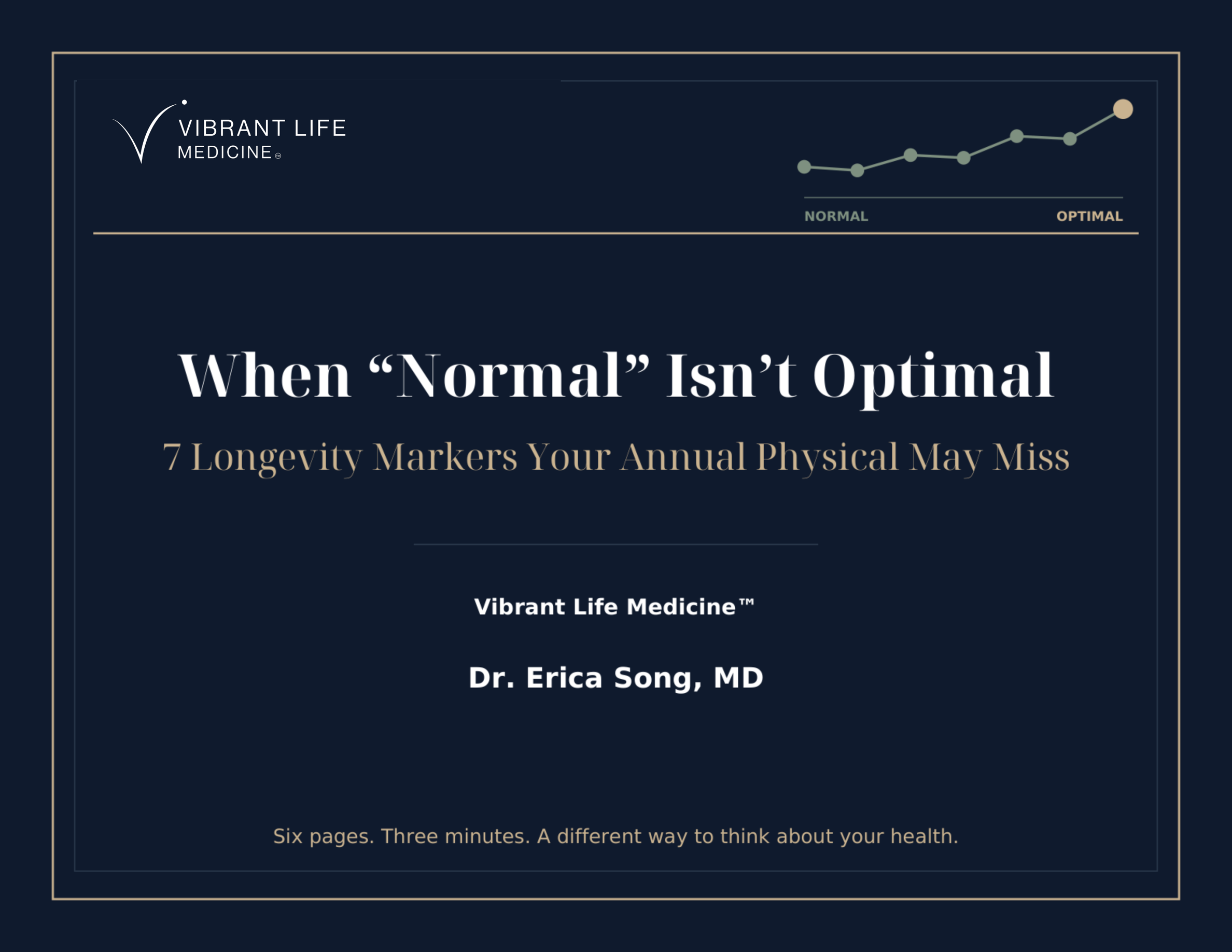
Curious about what a routine annual evaluation may not capture? Download When “Normal” Isn’t Optimal: 7 Longevity Markers Your Annual Physical May Miss.
Educational note: This article is for general educational purposes and is not a substitute for individualized medical advice, diagnosis, or treatment.
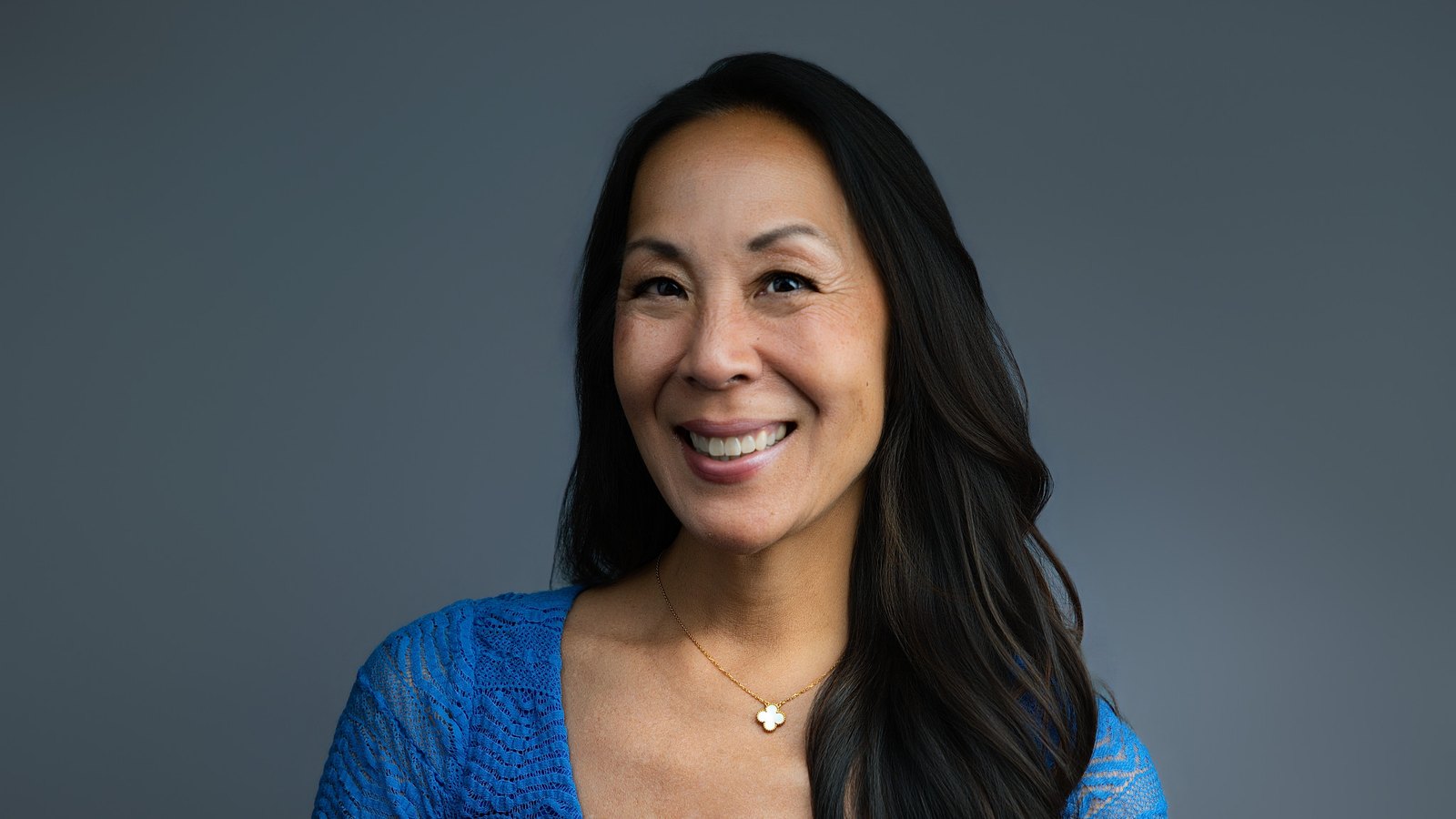
About the author: Erica Song, MD, is the founder of Vibrant Life Medicine, a physician-led precision longevity practice in Bergen County, New Jersey. She is double board-certified in Obstetrics and Gynecology and in Anti-Aging and Regenerative Medicine.
Routine labs can look normal while early biological changes are already underway. This guide explains the markers, measurements, and clinical questions that precision longevity medicine uses to evaluate healthspan, performance, and future risk.
Six pages. Three minutes. A different way to think about your health.
Vibrant Life Medicine is now accepting founding member interest in Bergen County, New Jersey. Priority List members are contacted first.
Join Priority List